High-Protein Cereal with Milk: 26g Protein, 290 Calories (Best…
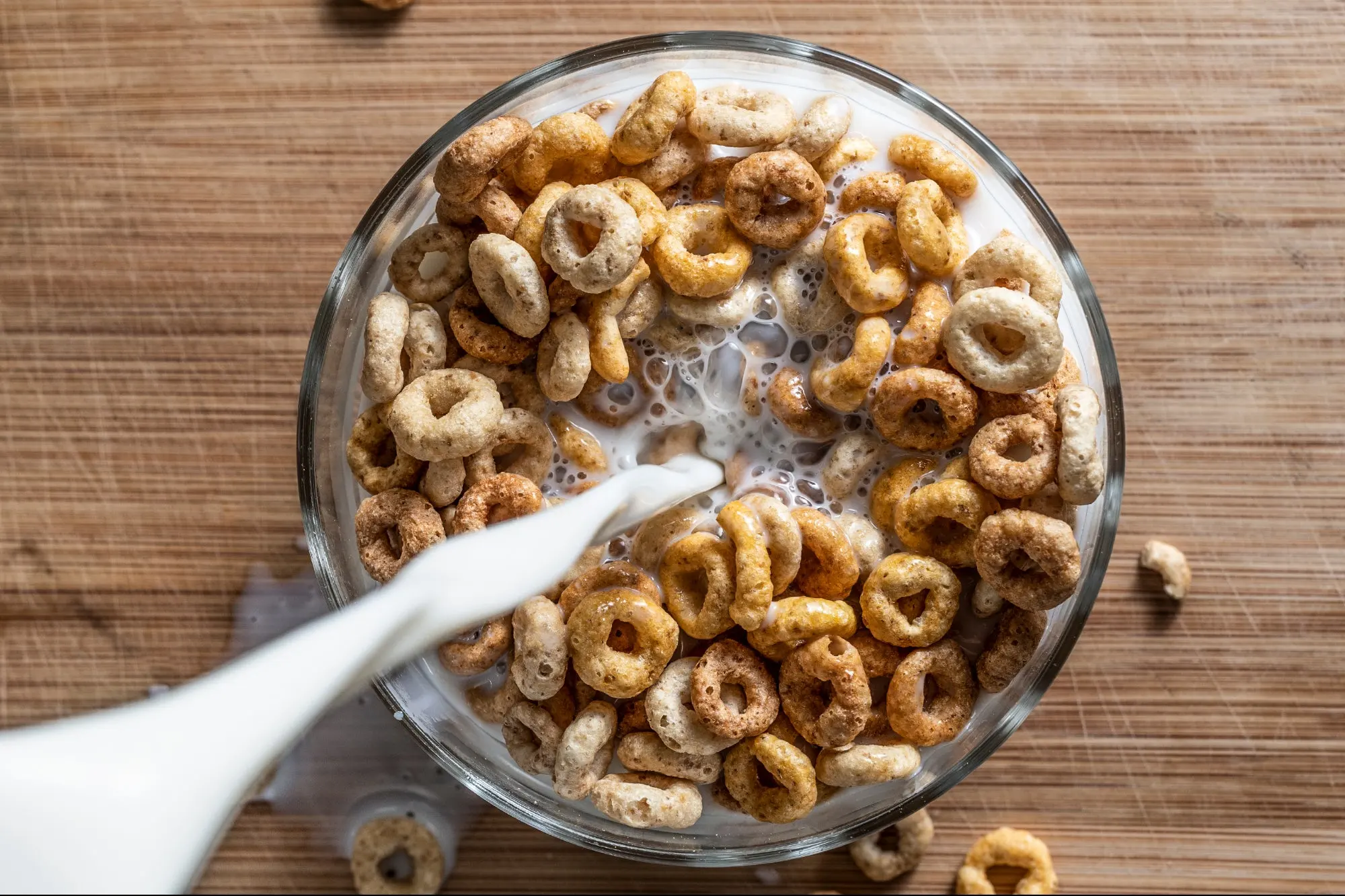
High-protein cereal with milk is the classic nostalgic breakfast — reinvented to deliver 26g of protein in 290 calories. Swap sugar-loaded traditional cereals for modern high-protein brands (Magic Spoon, Kashi Go, Catalina Crunch), pair with 1% milk or high-protein dairy, and you have a 2-minute breakfast that actually fuels your morning.
Ingredients (1 serving)
- 1 cup (40g) high-protein cereal (Magic Spoon, Kashi Go, Catalina Crunch, or similar)
- 1 cup (240ml) 1% milk (or Fairlife / lactose-free ultrafiltered milk)
- Optional: 1/2 cup (75g) mixed berries, 1 tbsp slivered almonds, pinch of cinnamon
Instructions
- Measure 1 cup of high-protein cereal into a bowl.
- Pour 1 cup of milk over the cereal.
- Add optional berries, nuts, or cinnamon.
- Eat immediately (high-protein cereals get soggy faster than traditional cereals).
- Log in Eati to confirm your macros.
Calories, Fat, and Protein (Estimated)
Calories: 290 kcal per serving (base recipe — varies by brand) Fat: 5g Protein: 26g Carbs: 30g (10g fiber, 2g added sugar or less)
With Fairlife 1% milk: +2g protein (28g total). With 1/2 cup berries: +35 cal.
Why High-Protein Cereals Work (and Traditional Cereals Don't)
Traditional cereal is one of the worst weight-loss breakfasts — 200+ cal per cup with 4g of protein and 20g of sugar. High-protein cereals flip the ratio entirely.
Macro comparison (per 1 cup):
Traditional cereals: • Cheerios: 100 cal, 3g protein, 1g sugar. • Frosted Flakes: 140 cal, 2g protein, 12g sugar. • Honey Nut Cheerios: 110 cal, 2g protein, 9g sugar. • Raisin Bran: 190 cal, 5g protein, 13g sugar.
High-protein cereals: • Magic Spoon: 140 cal, 13g protein, 0g sugar. • Kashi Go Crunch: 170 cal, 12g protein, 6g sugar. • Catalina Crunch: 110 cal, 11g protein, 0g sugar. • Three Wishes: 120 cal, 8g protein, 3g sugar. • Kellogg's Special K Protein: 160 cal, 10g protein, 9g sugar. • General Mills Hi Protein Fiber One: 140 cal, 9g protein.
This recipe combined with 1 cup of 1% milk (8g protein, 110 cal): • Magic Spoon: 250 cal, 21g protein. • Kashi Go: 280 cal, 20g protein. • Using 1 cup Fairlife 1% milk (13g protein, 90 cal): 230 cal, 26g protein.
Best combo: Magic Spoon or Catalina Crunch + Fairlife milk = 250 cal, 26g protein.
Why these cereals use protein isolates: • Milk protein isolate (whey + casein): highest protein-to-calorie. • Pea protein: plant-based option. • Allulose, monk fruit, stevia: replace sugar without insulin response. • Chicory root fiber, tapioca fiber: add 5–8g of fiber per serving.
Satiety: Most high-protein cereals keep you full 3–4 hours — a huge upgrade over 60-minute crashes from sugary cereals. The fiber + protein combo stabilizes blood sugar and prevents mid-morning hunger.
For more strategic breakfast picks, see 20 high-protein low-calorie breakfast ideas.
The Ultimate High-Protein Cereal Ranking
Not all 'protein' cereals are equal. Here's a buying guide ranked by protein-per-calorie:
Tier 1 (best fat-loss options):
- Catalina Crunch (best overall):
• 110 cal, 11g protein, 5g net carbs, 0g sugar. • Flavors: Cinnamon Toast, Dark Chocolate, Maple Waffle, Fruity. • $6/box (11 servings). • Clean label, uses tapioca/chicory root for fiber.
- Magic Spoon (strong flavor match to childhood cereals):
• 140 cal, 13g protein, 3g net carbs, 0g sugar. • Flavors: Fruity, Cocoa, Peanut Butter, Frosted, Blueberry. • $6–7/box online, slightly more at Whole Foods. • Uses milk protein isolate; allulose sweetener.
- Three Wishes:
• 120 cal, 8g protein, 4g sugar. • Made with chickpeas — higher fiber. • Gluten-free, grain-free.
Tier 2 (solid mid-range):
- Kashi Go Crunch:
• 170 cal, 12g protein, 6g sugar. • Widely available at supermarkets.
- Special K Protein:
• 160 cal, 10g protein, 9g sugar. • Higher sugar but cheap ($4/box).
- Kellogg's Frosted Mini Wheats Original:
• 200 cal, 6g protein, 12g sugar (not technically 'high-protein' but decent).
Tier 3 (skip these despite marketing):
- Post Foods Grape Nuts:
• 220 cal, 7g protein (fine but not special).
- Quaker Oat Squares:
• 210 cal, 6g protein, 9g sugar.
Worst offenders (marketed as healthy): • Kind Granola (any flavor): 250 cal, 5g protein per 1/2 cup. • Honey Bunches of Oats: 150 cal, 3g protein, 7g sugar. • Life cereal: 160 cal, 4g protein, 8g sugar.
Where to buy: • Amazon: best prices for Catalina Crunch, Magic Spoon. • Costco: often stocks Kashi Go in bulk. • Whole Foods: carries all premium brands. • Walmart: growing selection of Magic Spoon and Special K Protein.
Budget hack: Buy Amazon's Subscribe & Save for 5% off, then stack with rotating promos for up to 20% off premium protein cereals.
The Milk Factor: Which Milk Maximizes Protein
The milk you choose can double the protein of your bowl. Here's the ranking:
Per 1 cup:
- Fairlife Ultra-Filtered Skim / 1%: 13g protein, 80–90 cal.
• Industry leader: 50% more protein than regular milk. • Ultra-filtered process concentrates protein, removes lactose. • Widely available at grocery stores ($4–5 for 52 oz).
- Dairy milk (skim, 1%, 2%, whole): 8g protein, 80–150 cal.
• Gold standard complete protein. • More B12 and vitamin D than plant milks.
- Ripple Pea Protein Milk: 8g protein, 100 cal.
• Highest-protein plant milk. • Creamy texture.
- Soy milk (unsweetened): 7g protein, 80 cal.
• Best plant option besides pea. • Widely available.
- Almond milk (unsweetened): 1g protein, 30 cal.
• Lowest calorie but almost no protein. • Good if you're getting protein from cereal already.
- Oat milk: 2–3g protein, 100–140 cal.
• Creamy but adds carbs. • Not ideal for fat loss.
- Coconut milk: 0g protein, 40 cal (light).
• Not recommended for protein breakfasts.
Best combos for fat loss: • Catalina Crunch (110 cal, 11g protein) + Fairlife skim (80 cal, 13g protein) = 190 cal, 24g protein. • Magic Spoon (140 cal, 13g protein) + Fairlife 1% (90 cal, 13g protein) = 230 cal, 26g protein. • Add 1/2 cup berries: +35 cal, +3g fiber.
Lactose-free options: • Fairlife is lactose-free. • Lactaid: 8g protein, 110 cal. Widely available. • Plant milks are naturally lactose-free.
For more lean protein breakfasts, see high-protein low-calorie foods.
Cereal Bowl Variations and Serving Tips
Once you have a protein cereal and good milk, you can create endless bowl variations:
- Classic (base recipe, 290 cal, 26g protein):
• 1 cup protein cereal + 1 cup milk.
- Berry bowl (325 cal, 27g protein):
• Base + 1/2 cup mixed berries + cinnamon.
- Chocolate PB (400 cal, 30g protein):
• Chocolate cereal + 1 tbsp PB2 or peanut butter + sliced banana.
- Birthday cake (330 cal, 27g protein):
• Frosted cereal + 1/2 tsp vanilla + 1 tbsp rainbow sprinkles + drizzle of honey.
- Strawberry shortcake (310 cal, 27g protein):
• Fruity cereal + sliced strawberries + 1 tbsp Greek yogurt swirl.
- Overnight soaked (290 cal, 26g protein):
• Combine cereal + milk in a container the night before. • Soaks like overnight oats — softer texture, similar macros. • Works best with Magic Spoon and Catalina Crunch.
- Parfait style (350 cal, 32g protein):
• Layer cereal + Greek yogurt + berries in a glass. Looks fancy, eats like dessert.
Macro-boost add-ins: • +5g protein: 2 tbsp hemp hearts (+90 cal). • +3g protein: 1 tbsp chia (+60 cal). • +6g protein: 1/2 scoop whey (+50 cal). • +4g protein: 2 tbsp slivered almonds (+90 cal).
To upgrade a traditional cereal: • Mix 50/50 with Catalina Crunch or Magic Spoon. • Doubles protein, halves sugar vs pure traditional cereal. • Example: 1/2 cup Cheerios + 1/2 cup Catalina Crunch + 1 cup Fairlife = 230 cal, 18g protein.
Serving tips: • Don't skip breakfast pairing: add 1 hard-boiled egg on the side (+70 cal, +6g protein). • For kids: pair with 1/2 cup whole milk yogurt (+50 cal, +5g protein). • Post-workout: add 1 scoop whey to milk before pouring (boosts to 40g+ protein).
For other options, see high-protein cereal with milk - you're reading it! Also check overnight oats with protein.
High-Protein Cereal with Milk (26g Protein Breakfast) | Eati summary
A 2-minute breakfast with 26g of protein — no cooking, no meal prep, just pour and eat. Keep a box of Magic Spoon or Catalina Crunch and a carton of Fairlife milk on hand and breakfast is handled for weeks.
High-Protein Cereal with Milk: 26g Protein, 290 Calories (Best…
What's the best high-protein cereal?
Catalina Crunch (110 cal, 11g protein, 0g sugar) has the best protein-to-calorie ratio. Magic Spoon (140 cal, 13g protein) has the best flavor variety. Both are far ahead of traditional cereals. Pair either with Fairlife 1% milk (13g protein per cup) for a 24g+ protein bowl.
How many calories in high-protein cereal with milk?
About 250–290 calories per 1-cup serving with 1 cup of milk — depending on brand. With Catalina Crunch + Fairlife 1% milk, you're looking at 200 calories and 24g protein. Magic Spoon + Fairlife hits 230 cal with 26g protein.
Is Magic Spoon actually healthy?
Yes, for most healthy adults. Magic Spoon uses milk protein isolate (high-quality protein), allulose (zero-calorie sweetener), and tapioca/chicory fiber. 13g protein per cup with 0g sugar is excellent. If you have dairy sensitivity, try Catalina Crunch instead (plant-based fiber).
Does high-protein cereal actually help with weight loss?
Yes, as a quick-breakfast solution. 20–26g of protein + high fiber in 200–290 calories gives strong satiety. Traditional cereals (100–150 cal, 2–4g protein) spike blood sugar and leave you hungry in 1–2 hours. Protein cereals last 3–4 hours.
What milk has the most protein for cereal?
Fairlife Ultra-Filtered milk has 13g protein per cup (compared to 8g in regular milk). Ripple Pea Protein Milk is the best plant-based option at 8g per cup. Almond milk has almost no protein (1g), so pair it only if your cereal is already high-protein.
Free Tools to Reach Your Goals
Use our calorie burn calculator, calorie calculator, TDEE calculator, and macro calculator to set your daily targets. Explore all fitness & weight loss tools.