Fajita Chicken Casserole: 49g Protein in 363 Calories (Low-Carb &…
Fajita Chicken Casserole is a protein-forward baked dinner with juicy chicken, colorful peppers, and bold fajita seasoning. It is perfect for weeknight cooking and batch-friendly meal prep.
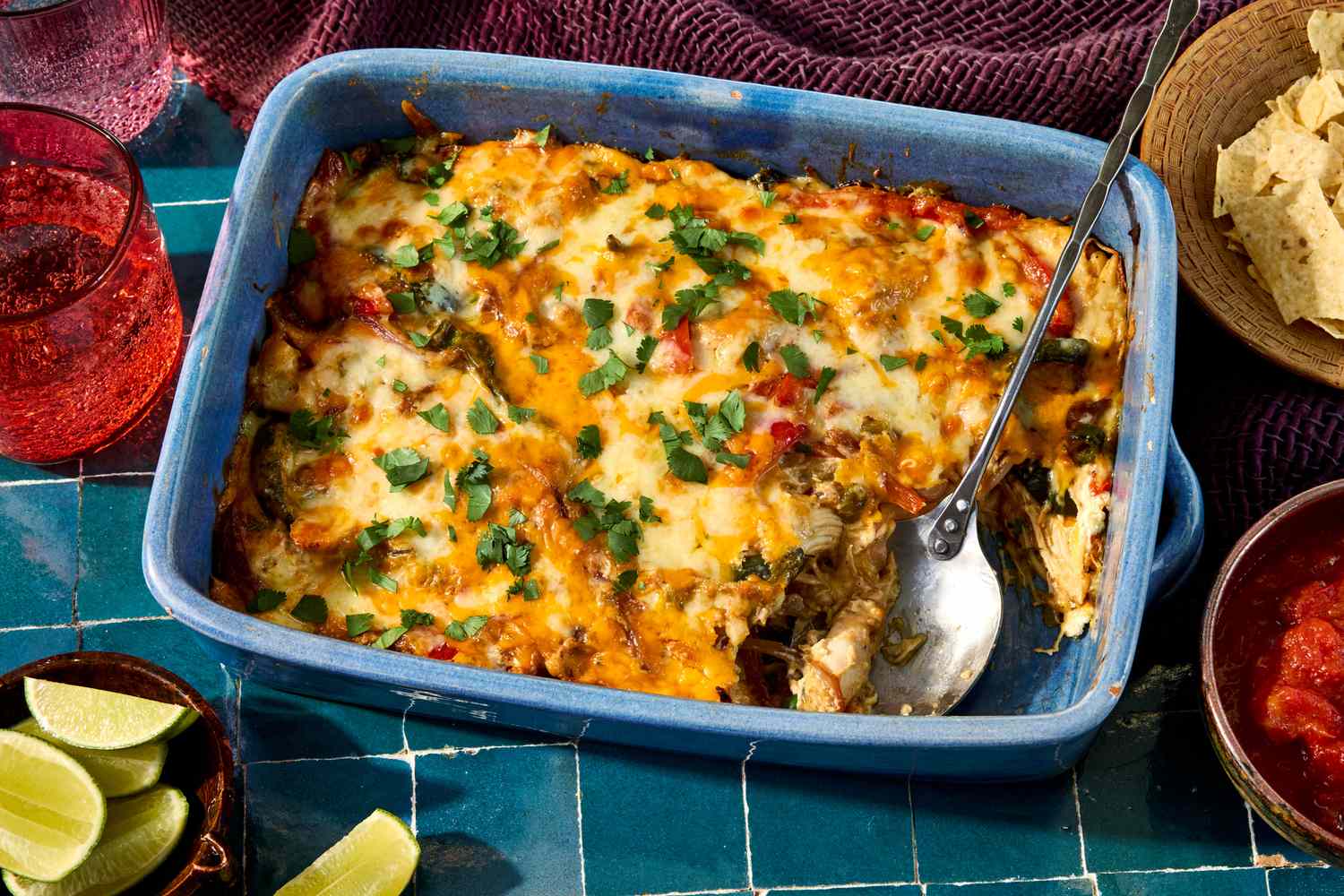
Ingredients
- Chicken
- Bell peppers
- Onion
- Fajita spices (cumin, chili powder, paprika)
- Garlic (optional)
- Mozzarella (or a similar cheese)
- Optional: black beans
- Salt, pepper, and olive oil
Instructions
- Preheat oven to 375F (190C).
- Season and cook chicken briefly in a skillet to develop flavor.
- Saute peppers and onion until slightly tender.
- Layer chicken, peppers/onion, and cheese in a baking dish; bake until bubbly.
- Serve and log your serving size in Eati for accurate macros.
Calories, Fat, and Protein (Estimated)
Calories: 363 kcal per serving (estimated) Fat: 13g Protein: 49g
Tip: keep toppings light to preserve a lower-fat macro profile.
Why This Fajita Casserole Is an Elite Fat-Loss Meal
Let's put the numbers in perspective. At 363 calories with 49g of protein and only 13g of fat, this casserole is one of the most nutritionally efficient fat-loss meals you can make:
• 13g protein per 100 calories — top 5% of all recipes for protein density. • Only 13g fat — makes room for other fats in your day. • High in vitamin C, B6, and fiber — thanks to the peppers and onions. • Gluten-free friendly — naturally, without any modifications. • Low-carb — approximately 10g net carbs per serving.
Comparison to traditional fajitas at restaurants: • Chili's chicken fajitas with tortillas, rice, beans: 1,100–1,400 calories. • Chipotle chicken bowl with similar fillings: 700–900 calories. • This casserole: 363 calories.
You can eat this casserole twice and still come in under a single restaurant fajita meal. For comparison with other high-protein options, see 30 best high-protein recipes. Use a protein calculator to determine your daily target.
Homemade Fajita Seasoning (Better Than Store-Bought)
Commercial fajita seasoning often contains fillers, MSG, excessive salt, and sometimes sugar. Making your own takes 2 minutes and tastes dramatically better.
Fajita seasoning blend (enough for 4 batches): • 2 tbsp chili powder • 1 tbsp smoked paprika • 1 tbsp cumin • 1 tbsp garlic powder • 2 tsp onion powder • 1 tsp oregano • 1 tsp black pepper • 1 tsp salt • 1/2 tsp cayenne (optional, for heat)
Mix in a small jar. Use 1–2 tablespoons per pound of chicken.
Why homemade wins: • No anti-caking agents (silicon dioxide, etc.) • Control sodium — commercial blends often have 500–800mg per teaspoon. • Fresher flavor — spices lose potency after 6 months; use within 3 months. • Cheaper — about $0.10 per batch vs $1 for packets.
Flavor boosters to add at serving: • Fresh lime juice (huge flavor upgrade) • Fresh cilantro • A pinch of chipotle powder for smokiness
Adjust salt based on how salty your other ingredients are (cheese, canned beans if you add them).
Making It More or Less Calorie-Dense
The beauty of this base recipe is how flexibly it scales for different goals.
To make it lower calorie (–60 per serving): • Use part-skim mozzarella (saves 40 cal per oz). • Skip the added oil; brown chicken in a non-stick pan. • Omit optional black beans or keep them at 1/4 cup portion. • Final: ~300 cal, 48g protein per serving.
To make it more calorie-balanced (+150 per serving): • Add 1/2 cup black beans per serving (adds 110 cal, 7g protein, 20g carbs). • Top with 1/4 cup Greek yogurt (30 cal, 5g protein). • Final: ~530 cal, 55g protein per serving — great for muscle building or maintenance.
To make it a burrito bowl (+250 per serving): • Serve over 1/2 cup brown rice or cilantro-lime rice (+100 cal). • Add 1/4 avocado (+80 cal). • Top with pico de gallo (+15 cal) and extra lime. • Final: ~620 cal, 52g protein per serving.
For a low-carb alternative: • Omit all grains and beans. • Serve over cauliflower rice (~30 cal per cup). • Top with 1/4 avocado and a dollop of sour cream. • Final: ~440 cal, 50g protein, 12g net carbs per serving.
What to Serve With Fajita Chicken Casserole
The casserole is flexible enough to serve in many formats:
Mexican-inspired sides: • Cilantro lime rice (1/2 cup, ~110 cal) • Cauliflower cilantro rice (1 cup, ~40 cal) • Refried beans (1/2 cup, ~120 cal) • Black bean salad with corn and lime (~150 cal per cup) • Mexican street corn (elote) (~150 cal per serving)
Low-calorie toppings: • Pico de gallo (15 cal per 1/4 cup) • Diced onions and cilantro • Lime wedges • Pickled jalapeños (5 cal) • Hot sauce (0 cal) • Nonfat Greek yogurt instead of sour cream (saves 40 cal)
Moderate-calorie toppings: • 1/4 avocado (~80 cal) • 2 tbsp guacamole (~50 cal) • 2 tbsp reduced-fat sour cream (~50 cal) • 1 tbsp shredded cheese (~25 cal)
Tortilla options: • Corn tortillas (2, small): ~100 cal • Whole-wheat tortilla (1, small): ~80 cal • Low-carb tortilla (1): ~50 cal • Skip the tortilla entirely — save 100+ cal
Balanced Mexican plate (580 cal, 55g protein): 1 serving casserole + 1/2 cup cilantro lime rice + 1/4 avocado + pico de gallo + lime wedge. See high-protein low-calorie foods for more protein-packed ideas.
Meal Prep & Make-Ahead Tips
Casseroles are perfect for batch cooking because they hold up well and reheat evenly.
Full-week prep strategy:
- Make a 9×13 casserole on Sunday (serves 6).
- Cool completely before portioning.
- Divide into 6 containers with different sides:
• Days 1–2: Rice and salsa. • Days 3–4: Cauliflower rice and avocado. • Days 5–6: Wrapped in a tortilla with extra cheese.
Storage: • Fridge: 4 days in airtight glass containers. • Freezer: 2 months. Wrap tightly to prevent freezer burn.
Reheating: • Oven (best for large portions): 350°F, covered, for 15 min. Uncover for last 3 min to re-crisp cheese. • Microwave: 2 min covered, stir, 45 more seconds.
Make-ahead tip: Assemble the entire casserole (chicken, peppers, cheese) in a baking dish, cover, and refrigerate up to 24 hours in advance. Bake for 30 min when you're ready (add 5 min to cook time from cold).
Freezer meal prep: Assemble but don't bake. Wrap the dish tightly in foil and freeze for up to 2 months. Thaw overnight in the fridge, then bake as directed. For more efficient tracking across the week, see how to track calories correctly.
Fajita Chicken Casserole (High-Protein Recipe) | Eati summary
A simple casserole that makes it easy to eat more protein without feeling like you are sacrificing flavor. Track it in Eati and repeat what works.
Fajita Chicken Casserole: 49g Protein in 363 Calories (Low-Carb &…
How many calories in fajita chicken casserole?
Approximately 363 calories per serving with 49g of protein and 13g of fat. Adding black beans (+110 cal), rice (+100 cal), or avocado (+80 cal) adjusts the total; the base casserole is one of the most protein-dense fat-loss meals you can make.
Is this fajita casserole low carb?
Yes. The base recipe (chicken, peppers, onion, cheese, spices) is approximately 10g net carbs per serving, making it low-carb and keto-friendly. Adding black beans or rice pushes it out of keto but keeps it reasonable for general low-carb diets.
Can I make fajita casserole ahead of time?
Yes. Assemble the full dish up to 24 hours in advance, cover, and refrigerate. Add 5 minutes to the bake time when cooking from cold. For longer storage, assemble and freeze uncooked for up to 2 months; thaw overnight before baking.
What protein can I use besides chicken?
Any lean protein works: skirt steak (fajita classic), shrimp (add in last 10 min), ground turkey, pork tenderloin, or firm tofu. Shrimp fajita casserole is especially popular — cut the cook time by 10 minutes and add shrimp during the last 5 minutes.
How do I make fajita casserole spicier?
Add 1/2 tsp chipotle powder to your seasoning, or include 1 diced jalapeño with the peppers. For extra heat, top finished portions with sliced fresh jalapeños, hot sauce, or pickled jalapeños. Poblano peppers also add mild heat with great flavor.
Free Tools to Reach Your Goals
Use our calorie burn calculator, calorie calculator, TDEE calculator, and macro calculator to set your daily targets. Explore all fitness & weight loss tools.