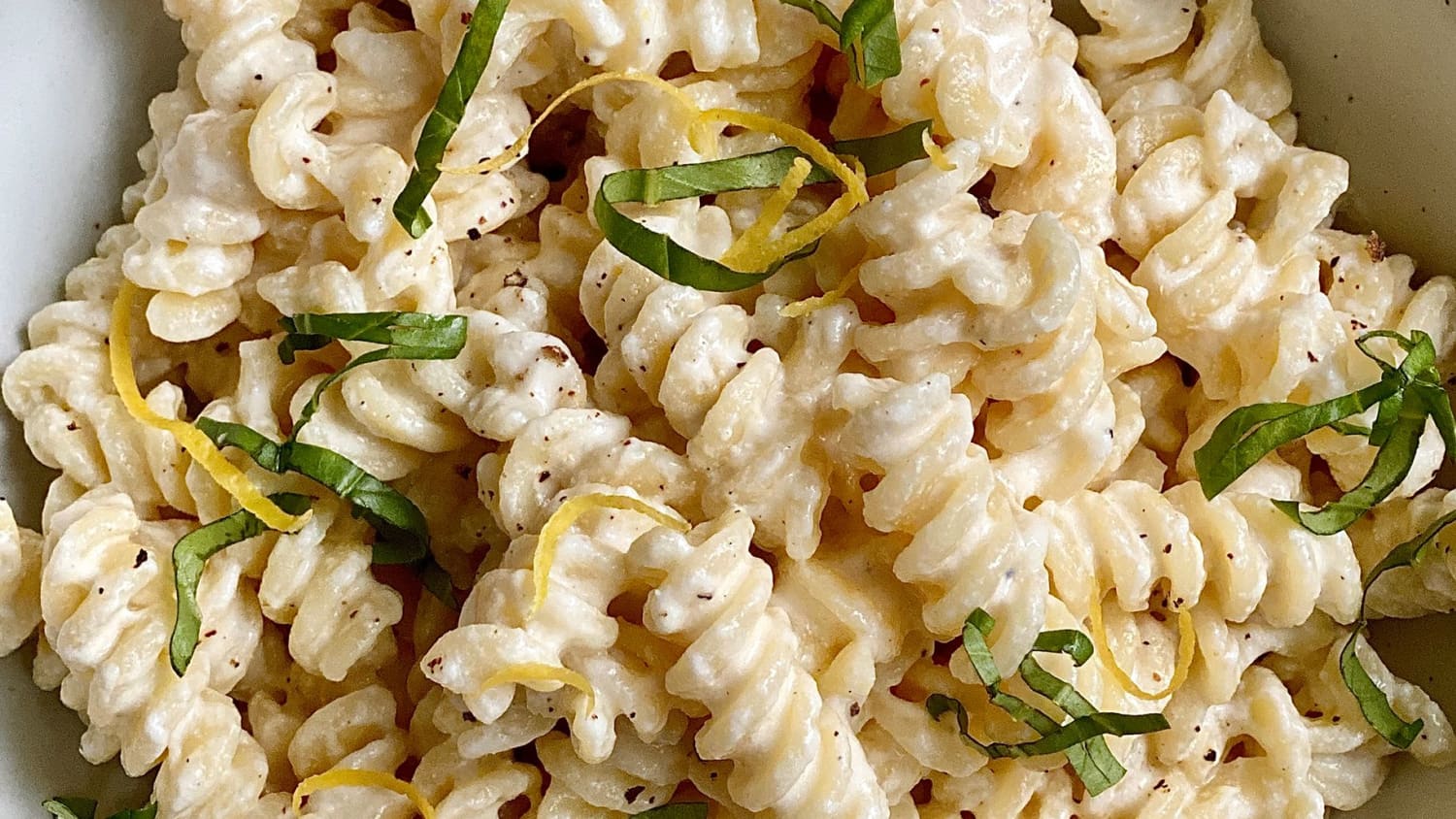
Creamy Cottage Cheese Pasta: 40g Protein (Save 230 Cal vs Alfredo)
Creamy Cottage Cheese Pasta is comfort-food flavor with a protein upgrade. Cottage cheese helps boost protein and keeps the sauce creamy, making this a great option for meal prep and Eati tracking.
Ingredients
- Pasta
- Cottage cheese
- Garlic
- Parmesan
- Spinach
- Herbs
- Salt and pepper
Instructions
- Cook pasta until al dente; reserve a splash of pasta water.
- Blend or warm cottage cheese with garlic until smooth.
- Stir in parmesan, herbs, and a little pasta water to create a creamy sauce.
- Add spinach and cook until wilted.
- Combine pasta with sauce, adjust seasoning, and serve; log in Eati.
Calories, Fat, and Protein (Estimated)
Calories: 722 kcal per serving (estimated) Fat: 19g Protein: 40g
Tip: portion your pasta carefully to keep calories predictable.
Why Cottage Cheese Creates the Perfect Creamy Pasta Sauce
Cottage cheese replacing heavy cream or cheese sauce is one of the best high-protein cooking hacks of the last five years.
Traditional creamy pasta (e.g., Alfredo) — 1 cup sauce: • 450 calories • 12g protein • 40g fat (mostly saturated) • 1 cup heavy cream = 800+ cal alone
Cottage cheese pasta sauce — 1 cup sauce: • 220 calories • 28g protein • 4g fat • Same creamy texture when blended properly
You save 230 calories AND double the protein compared to traditional Alfredo. Over a week of pasta dinners, that's 1,600+ calories saved.
Why the texture works: When blended smooth, cottage cheese mimics: • The creaminess of ricotta • The body of Alfredo sauce • The tang of crème fraîche
Sauce variations possible: • Alfredo-style (blended smooth + parmesan) • Ricotta-style (lightly blended with basil) • Vodka sauce (blended with tomatoes) • Pesto-cream (blended with basil pesto) • Carbonara-style (with eggs and crispy bacon)
The trick: Blend cottage cheese smooth *before* heating. A food processor or immersion blender works in 20 seconds. Never heat chunky cottage cheese for sauces — it looks separated even if it tastes fine.
Pro tip: Add 2–3 tbsp pasta water to the blended cottage cheese. The starch helps the sauce cling beautifully to pasta. Use a protein calculator to see how this fits your targets.
Choosing the Best Pasta for Fat Loss
The pasta you choose dramatically affects macros. This recipe is 722 cal per serving partly because pasta portions scale fast.
Pasta comparison (2 oz dry = 1 serving):
| Pasta Type | Calories | Protein | Fiber |
|---|---|---|---|
| Regular white (semolina) | 200 | 7g | 2g |
| Whole wheat | 180 | 8g | 6g |
| Chickpea pasta | 190 | 14g | 8g |
| Lentil pasta | 190 | 13g | 8g |
| Edamame pasta | 180 | 24g | 11g |
| Rice pasta (GF) | 200 | 4g | 1g |
| Shirataki noodles | 5 | 0g | 3g |
| Zucchini noodles (per 2 cups) | 40 | 3g | 3g |
For this recipe, three strategy levels:
Regular pasta (as written, 722 cal, 40g protein): • Best flavor and texture. • Works when you have calorie room. • Portion control is key.
Higher-protein upgrade (same cal, 52g protein): • Swap half the pasta for edamame or chickpea pasta. • Nearly identical texture with added 12g protein. • Higher fiber too.
Lower-carb version (450 cal, 38g protein): • Replace 50% pasta with zucchini noodles. • Same sauce, nearly half the calories.
Keto version (280 cal, 35g protein): • All shirataki or zucchini noodles. • Same sauce delivers protein and flavor.
Portion reality check: • Restaurant pasta: 4–6 oz dry weight (way over standard serving). • 'Normal' serving: 2 oz dry = 200 cal. • Weighing dry pasta before cooking is the most accurate method.
Al dente matters: Cooking pasta to al dente (slightly firm) lowers the glycemic index and slows sugar absorption. Follow package minimum time, not maximum.
10 Creamy Cottage Cheese Pasta Variations
The base blended cottage cheese technique unlocks endless flavor possibilities.
- Classic Alfredo-style:
• Blended cottage cheese + 1/4 cup parmesan + garlic + pepper + lemon zest.
- Creamy pesto:
• Blended cottage cheese + 2 tbsp pesto + basil.
- Vodka sauce:
• Blended cottage cheese + 1/2 cup marinara + pinch of red pepper flakes + vodka (optional).
- Lemon-garlic:
• Blended cottage cheese + 2 cloves garlic + lemon zest + parsley.
- Spinach-Parmesan:
• Blended cottage cheese + 2 cups spinach (wilted) + parmesan + nutmeg.
- Mushroom cream:
• Blended cottage cheese + sautéed mushrooms + thyme + parmesan.
- Buffalo chicken pasta:
• Blended cottage cheese + 1 tbsp buffalo sauce + shredded chicken + blue cheese.
- Sun-dried tomato:
• Blended cottage cheese + 1/4 cup chopped sun-dried tomatoes + basil + garlic.
- Carbonara-style:
• Blended cottage cheese + 1 egg yolk + crispy turkey bacon + parmesan + black pepper.
- Spicy arrabbiata:
• Blended cottage cheese + 1/2 cup marinara + red pepper flakes + garlic + basil.
Add protein to any version: • Grilled chicken (+30g protein, +160 cal per 4 oz) • Shrimp (+24g protein, +120 cal per 4 oz) • Ground turkey (+25g protein, +170 cal per 4 oz) • Tuna (+25g protein, +140 cal per 4 oz) • White beans (+15g protein, +200 cal per cup)
Add veggie volume: • Roasted cherry tomatoes • Sautéed mushrooms • Wilted spinach • Grilled zucchini • Roasted broccoli • Asparagus
Pasta Portion Control Strategies
Pasta is one of the easiest foods to overeat. Here's how to enjoy it without blowing your calorie target:
Strategy 1: Weigh dry, not cooked. • Dry pasta has a stable weight; cooked varies based on starch absorption. • 2 oz dry pasta = ~200 cal, always. • Cooked pasta is 75% water — weighing cooked pasta can mislead by 30%+.
Strategy 2: Use the 'fist rule.' • 1 fist-sized serving of cooked pasta = approximately 1 cup = ~220 cal. • Simple visual portion control without scales.
Strategy 3: Pasta-to-veggie ratio. • Aim for at least 1:1 veggies to pasta by volume. • Adds volume without calories. • Increases nutrient density.
Strategy 4: Pasta first, protein second. • Think of pasta as a supporting ingredient, not the main event. • Protein and vegetables should be 60%+ of plate volume.
Strategy 5: High-protein pasta sub. • 50% swap with chickpea/edamame pasta. • Maintains texture while adding protein. • Reduces glycemic impact.
Strategy 6: Smaller plate illusion. • 9-inch plates look fuller than 11-inch plates with same portion. • Clinically proven to reduce consumption by 20%+.
Common pasta overeating triggers: • Eating straight from cooking pot (portions grow unconsciously). • Grating cheese aggressively (easily adds 100+ cal). • 'Finishing the bowl' mentality. • Leftover-grabbing (standing pasta snacks from fridge).
Meal prep trick: Portion pasta into containers immediately after cooking. No browsing the pot; no 'one more forkful.' Set amount, closed lid.
For more weight-loss food strategies, see best foods for weight loss and how to lose weight without giving up your favorite foods.
Meal Prep, Reheating, and Final Tips
Creamy cottage cheese pasta has its quirks for meal prep but works with the right approach.
What to know: • Cottage cheese sauce can separate when reheated. • Pasta absorbs sauce over 24+ hours. • Total dish may become drier than fresh.
Best meal prep approach:
- Cook pasta al dente (barely done).
- Cool pasta quickly in ice water to stop cooking.
- Store pasta separately from sauce.
- Reheat sauce with a splash of milk/water.
- Combine fresh.
Simplified approach (works but less ideal):
- Combine everything.
- Store in fridge up to 3 days.
- Reheat with 2 tbsp water/milk added and cover.
Reheating techniques:
Stovetop (best): • Medium-low heat. • Add 2 tbsp water per serving. • Stir every minute for 3–5 min. • Re-creaminess.
Microwave: • 1 minute covered. • Stir, add 1 tbsp milk. • Another 30 seconds.
Oven (best for baked pasta): • 350°F covered for 15 min. • Uncover last 5 for crispy top.
Batch cooking tips: • Triple the sauce; freeze in 1-cup portions. • Cook pasta fresh as needed — pasta freezes poorly. • Sauce freezes up to 3 months.
Variations for meal prep: • Baked pasta casserole: Layer cooked pasta, sauce, extra protein, top with mozzarella. Bake 20 min. Slice for reheating. • Pasta salad: Use cold. Toss with pasta, veggies, and herbs. Actually better the next day. • Stuffed bell peppers: Mix pasta with sauce, stuff into peppers, bake.
Final tips: • Always taste sauce before combining — salt and pepper are key. • Reserve 1/4 cup pasta water for sauce adjustment. • Fresh herbs at the end brighten flavors. • Finish with 1 tsp olive oil for richness.
For related recipes, see cottage cheese pizza bowl and 30 best high-protein recipes.
Creamy Cottage Cheese Pasta (High-Protein Recipe) | Eati summary
This pasta helps you enjoy creamy comfort while still hitting a high-protein goal. Track it in Eati for accurate macros.
Creamy Cottage Cheese Pasta: 40g Protein (Save 230 Cal vs Alfredo) FAQ
How much protein is in creamy cottage cheese pasta?
Approximately 40g of protein per serving in 722 calories. Using high-protein pasta (chickpea or edamame) boosts this to 50–55g per serving with similar calories. Adding 4 oz of grilled chicken or shrimp pushes it to 60–65g protein.
Does cottage cheese really work as pasta sauce?
Yes, surprisingly well. Blended smooth in a food processor, cottage cheese mimics the creaminess of ricotta or Alfredo sauce while delivering far more protein. The blend is crucial — never use chunky cottage cheese as sauce, only blended smooth.
Why does my cottage cheese sauce look grainy?
Three common causes: (1) Not blended smooth enough — blend 30–45 seconds until silky. (2) Heated too quickly or too hot — warm gently. (3) Old cottage cheese — use fresh. Adding 2 tbsp pasta water and a pat of butter smooths any remaining texture.
Can I make this pasta lower in calories?
Yes, three ways: (1) Swap 50% pasta for zucchini noodles (saves 100 cal). (2) Use high-protein pasta (maintains calories, adds protein). (3) Reduce pasta serving from 3 oz dry to 2 oz dry (saves 100 cal). Stacking all three gets you to about 400 calories per serving.
Can I use Greek yogurt instead of cottage cheese?
Yes, with slightly different results. Greek yogurt creates a tangier sauce and works well. Use 1 cup plain nonfat Greek yogurt per 1 cup cottage cheese. Temper with hot pasta water first to prevent curdling when heated.
Free Tools to Reach Your Goals
Use our calorie burn calculator, calorie calculator, TDEE calculator, and macro calculator to set your daily targets. Explore all fitness & weight loss tools.