Quark with Honey & Nuts: 24g Protein, 285 Calories (European Protein…
Quark with honey and nuts is a 285-calorie, 24g-protein European-style breakfast that's like Greek yogurt's protein-richer cousin. Quark is a fresh, strained cheese with nearly twice the protein of regular yogurt per gram — and the creamy, mild flavor pairs beautifully with a drizzle of honey and crunchy walnuts.
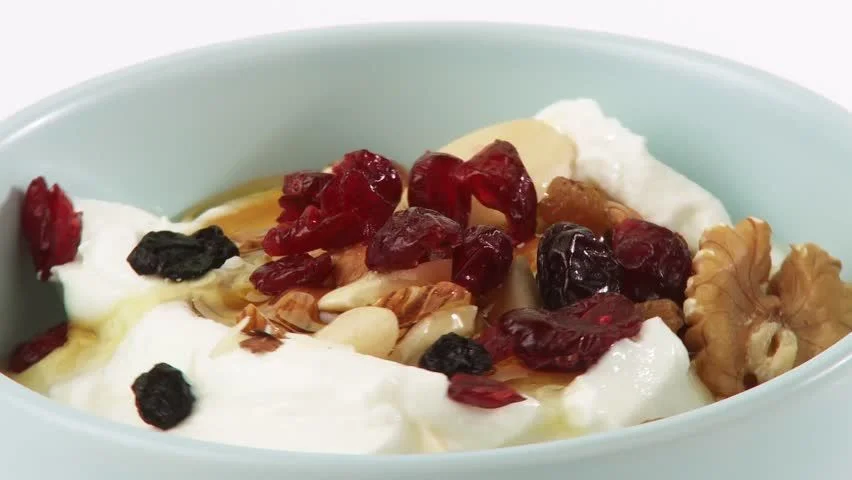
Ingredients (1 serving)
- 1 cup (250g) low-fat (0.2–0.3%) quark
- 1 tsp honey (or maple syrup)
- 1 tbsp (10g) chopped walnuts or almonds
- 1/4 tsp cinnamon
- Optional: 1/2 cup (75g) mixed berries, 1 tsp vanilla extract, 1 tbsp chia seeds
Instructions
- Spoon 1 cup of quark into a bowl.
- Drizzle honey across the top.
- Sprinkle chopped walnuts and cinnamon.
- Add optional berries or vanilla for flavor depth.
- Stir or eat in layers.
- Log your serving in Eati.
Calories, Fat, and Protein (Estimated)
Calories: 285 kcal per serving Fat: 10g Protein: 24g Carbs: 18g (8g natural sugars + 4g from honey)
With 1/2 cup berries: 320 cal, 25g protein. Skip honey: 265 cal, 24g protein.
What Is Quark and Why Is It So High in Protein?
If you've never tried quark, you're missing one of the densest-protein dairy products in the world.
What quark is: • German/Central European fresh cheese. • Made by acidifying (souring) milk and straining the curd. • Texture: between Greek yogurt and cottage cheese. • Flavor: mild, slightly tangy, less tart than Greek yogurt. • Near-zero lactose (mostly strained out).
Protein comparison per 100g: • Low-fat quark: 12–14g protein, 65 cal. • Nonfat Greek yogurt: 10g protein, 60 cal. • Nonfat cottage cheese: 11g protein, 70 cal. • Regular yogurt: 4g protein, 60 cal. • Icelandic skyr: 11g protein, 60 cal.
Quark wins on protein density by about 15–25% over Greek yogurt.
Macro breakdown of this bowl: • 285 calories • 24g protein • 10g fat (mostly from walnuts) • 18g carbs (8g natural from milk, 4g from honey) • ~8.5g protein per 100 calories
Satiety: • 95%+ casein protein = 4–6 hour satiety. • Walnuts add healthy fats for additional fullness. • Honey gives a quick-hit of sweetness without much sugar.
Taste description: Quark is creamy, mild, and slightly tangy — think yogurt meets whipped cream cheese. It's less sour than Greek yogurt and less grainy than cottage cheese. Most people who try quark prefer it over Greek yogurt.
Where to buy: • US: Whole Foods (Vermont Creamery quark), Trader Joe's, Costco (Icelandic Provisions now markets a quark-skyr hybrid). • Europe: any supermarket, usually called 'quark' or 'topfen.' • Online: Amazon Fresh in larger cities.
For the full protein dairy lineup, see high-protein low-calorie foods and 20 high-protein low-calorie breakfast ideas.
Quark vs Greek Yogurt vs Skyr vs Cottage Cheese
All four are high-protein dairy options. Here's a detailed comparison:
Protein per 100g: • Low-fat quark: 12–14g protein. • Nonfat Greek yogurt: 10g protein. • Icelandic skyr: 11g protein. • Low-fat cottage cheese: 11g protein.
Calorie density (per 100g): • Quark (low-fat): 65 cal. • Greek yogurt (nonfat): 60 cal. • Skyr (nonfat): 60 cal. • Cottage cheese (low-fat): 85 cal.
Texture and flavor: • Quark: creamy, mild, slightly tangy. Smoothest texture. • Greek yogurt: thick, tart, sometimes grainy. • Skyr: thickest of all, mild, rich. • Cottage cheese: lumpy (curds), mild, salty.
Best for: • Quark: best for those who find Greek yogurt too sour. Versatile for sweet and savory. • Greek yogurt: most widely available, most versatile. • Skyr: thickest, best for savory applications or as sour cream substitute. • Cottage cheese: most sodium; great for savory bowls and blended applications.
Lactose content (per 100g): • Quark: 2–3g (low). • Greek yogurt: 4g (low). • Skyr: 4g (low). • Cottage cheese: 3–4g (low). • All four are generally well-tolerated by lactose-sensitive people.
Price (average in US): • Quark: $5 per 16 oz (hard to find, premium pricing). • Greek yogurt: $5–6 per 32 oz tub. • Skyr: $5 per 24 oz tub. • Cottage cheese: $4 per 24 oz tub.
When to choose which: • Highest protein at breakfast: quark or cottage cheese. • Creamiest texture: quark. • Best value: Greek yogurt or cottage cheese. • Thickest texture for dips: skyr. • Savory Mediterranean recipes: cottage cheese or quark.
Substitutions: • If quark is unavailable, use half Greek yogurt + half cottage cheese. Similar protein and texture.
For more Greek yogurt and skyr options, see greek yogurt with berries & chia seeds and skyr yogurt with granola.
Sweet and Savory Quark Variations
Quark is endlessly versatile. Here are 10 ways to eat it beyond honey and nuts:
Sweet variations:
- Classic honey-walnut (this recipe, 285 cal, 24g protein).
- Berry bowl (290 cal, 25g protein):
• Quark + mixed berries + 1 tsp maple syrup + cinnamon.
- Apple-cinnamon (300 cal, 24g protein):
• Quark + diced apple + cinnamon + walnuts + raisins.
- Chocolate dessert (320 cal, 26g protein):
• Quark + 1 tbsp cocoa + 1 tsp honey + dark chocolate chips + raspberry.
- Coffee-tiramisu (295 cal, 25g protein):
• Quark + 1 shot espresso + 1 tbsp cocoa + 1 graham cracker crumbled.
Savory variations:
- Herb-cucumber (250 cal, 24g protein):
• Quark + diced cucumber + dill + lemon + olive oil + salt.
- Smoked salmon style (320 cal, 30g protein):
• Quark + 2 oz smoked salmon + red onion + capers + dill. Like smoked salmon & cream cheese toast without the bread.
- Tomato-basil (260 cal, 24g protein):
• Quark + cherry tomatoes + fresh basil + olive oil + balsamic + sea salt.
- Egg-everything (350 cal, 30g protein):
• Quark + 1 hard-boiled egg, sliced + everything bagel seasoning + scallion.
- Mediterranean dip (270 cal, 25g protein):
• Quark + feta crumbles + black olives + olive oil + oregano. Eat with cucumber slices.
Usage beyond the breakfast bowl: • Substitute for sour cream in dips and sauces (saves 80% of fat, adds 20g protein per cup). • Blend into smoothies for thickness + protein. • Use as ricotta replacement in lasagna (near-identical texture). • Mix with cocoa and sweetener for protein pudding. • Folded into pancake batter for fluffy high-protein stacks (like our low-calorie protein pancakes).
Nut pairings: • Walnuts: most classic, omega-3 bonus. • Almonds: mild, crunchy. • Hazelnuts: nutty, rich. Classic in Germany. • Pecans: sweet, buttery. • Pistachios: colorful, slightly savory. • Peanuts: unusual but work with honey.
Meal Prep, Where to Buy, and Cost Analysis
Quark isn't as widely available as Greek yogurt in the US, so sourcing is the first challenge:
Where to find quark in the US:
- Whole Foods:
• Vermont Creamery Quark (500g tub): $5. • Usually in specialty dairy section.
- Trader Joe's:
• Vermont Creamery partnership. • Sometimes stocked, varies by location.
- Wegmans:
• Carries Lifeway Quark (organic).
- European specialty markets:
• German delis have multiple brands. • Russian delis often stock 'tvorog' (similar to quark).
- Online:
• Amazon Fresh (in select cities). • FreshDirect.
- Make your own (3 ingredients, 30 min + overnight drip):
• 1 gallon whole milk + 2 tbsp buttermilk + 1 tsp salt. • Heat to 75°F, add buttermilk, let sit 24 hrs until curds form. • Drain through cheesecloth 12+ hrs. • Yields ~1 quart quark at about $4 total.
Weekly meal prep: • Buy 1–2 tubs quark weekly (lasts 10 days unopened). • Pre-portion 1-cup servings into mason jars with pre-chopped nuts. • Just add honey and fruit each morning.
Cost per serving: • Quark: $1.25 (1 cup). • Walnuts: $0.30 (1 tbsp). • Honey: $0.10. • Optional berries: $0.40. • Total: ~$2.05 per breakfast.
Compared to: • Chobani flavored yogurt cup: $1.50, 10g protein. • Yoplait parfait: $2.50, 6g protein. • This bowl: $2.05, 24g protein — best protein-per-dollar.
Storage: • Unopened quark: 10–14 days past 'sell-by' date. • Opened: 5–7 days. • Don't freeze — texture breaks down.
If quark is truly unavailable: Use 3/4 cup nonfat Greek yogurt + 1/4 cup cottage cheese blended smooth. Nearly identical macros (24g protein, 250 cal) with very similar texture.
For more high-protein dairy strategies, see cottage cheese & apple slices.
Quark with Honey & Nuts (24g Protein Breakfast) | Eati summary
Quark deserves more attention than it gets — 24g of casein protein in a creamy, mild 285-calorie bowl is exceptional for a no-cook breakfast. If you can find quark at Whole Foods or a specialty market, it will become a new favorite.
Quark with Honey & Nuts: 24g Protein, 285 Calories (European Protein…
How many calories in quark with honey and nuts?
About 285 calories per serving with 1 cup low-fat quark, 1 tsp honey, 1 tbsp walnuts, and cinnamon. Delivers 24g of protein — among the highest in any no-cook breakfast.
Is quark healthier than Greek yogurt?
They're both excellent, but quark edges out Greek yogurt on protein density (12–14g per 100g vs 10g). Both have similar calorie counts, calcium levels, and satiety profiles. Quark is generally creamier and less tart — a win for people who find Greek yogurt too sour.
Where can I buy quark in the US?
Whole Foods (Vermont Creamery Quark), Trader Joe's (select stores), Wegmans (Lifeway), and European delis. Amazon Fresh carries it in major cities. If you can't find it, substitute 3/4 cup nonfat Greek yogurt + 1/4 cup cottage cheese blended smooth — nearly identical texture and macros.
Is quark good for weight loss?
Yes. 12–14g of slow-digesting casein protein per 100g keeps you full 4–6 hours, and the calorie density is lower than most cheeses. It's also naturally low in lactose (2–3g per 100g), making it friendly for lactose-sensitive eaters.
How much protein is in 1 cup of quark?
About 24–28g of protein per cup (250g) of low-fat quark. That's more protein than 4 large eggs or a chicken breast. Combined with its low calorie density (~170 cal per cup without toppings), it's one of the densest protein foods you can buy.
Free Tools to Reach Your Goals
Use our calorie burn calculator, calorie calculator, TDEE calculator, and macro calculator to set your daily targets. Explore all fitness & weight loss tools.