Garlic Chicken & Potatoes Skillet: 43g Protein One-Pan Dinner (504…
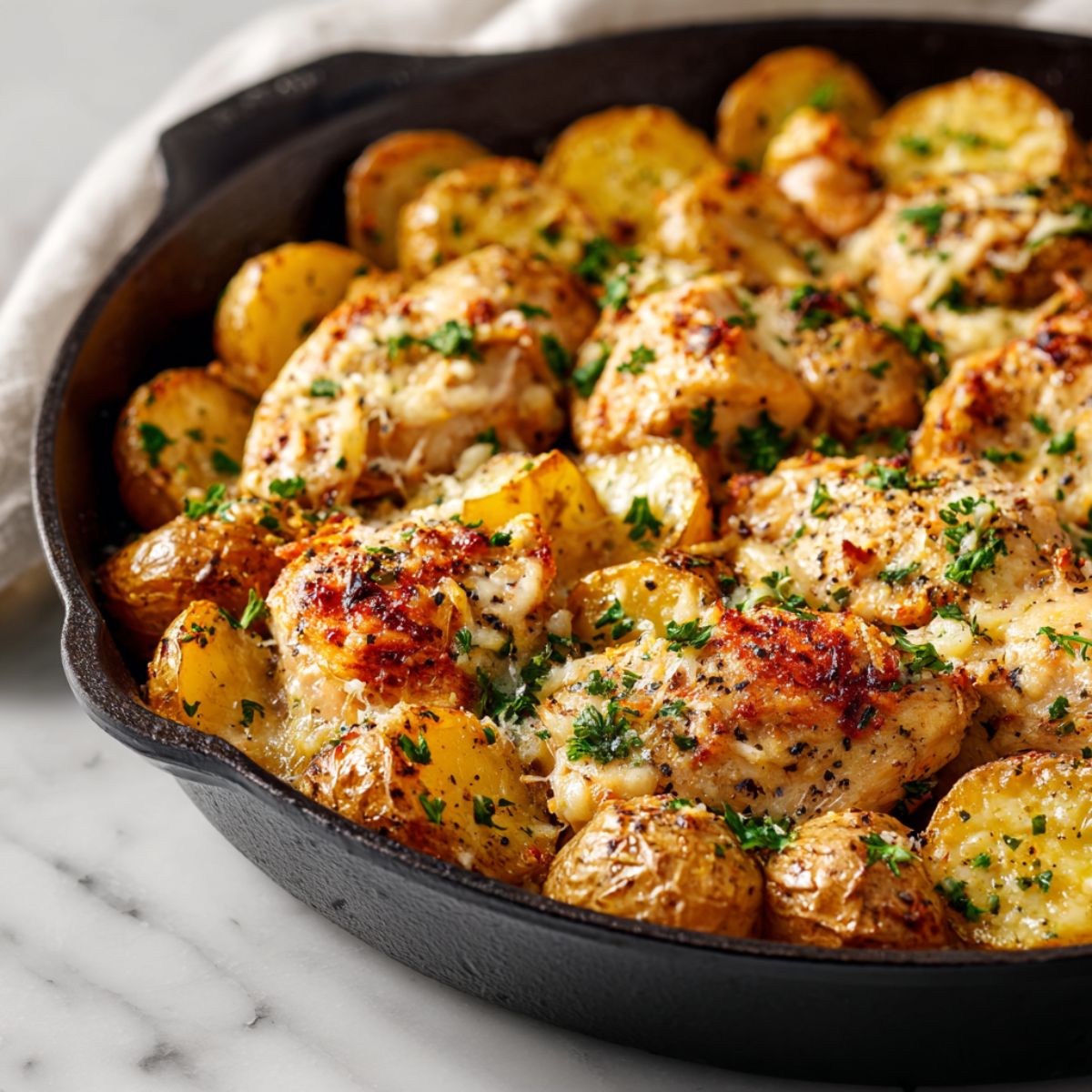
Garlic Chicken and Potatoes Skillet is a one-pan dinner that combines juicy chicken with filling potatoes and bold garlic-herb flavor. It is easy to cook, easy to portion, and simple to log in Eati.
Ingredients
Instructions
Calories, Fat, and Protein (Estimated)
Calories: 504 kcal per serving (estimated) Fat: 21g Protein: 43g
Tip: keep the oil measured to control fat while keeping flavor strong.
Why Potatoes Belong in a Fat-Loss Diet
Potatoes have an unfair reputation in diet culture — they're often treated as 'bad carbs' or a weight-loss enemy. In reality, potatoes are one of the most filling foods per calorie you can eat, which makes them excellent for fat loss.
The science: • Boiled potatoes top the scientific satiety index — more filling per calorie than any other food tested. • A medium potato (150g) is only ~120 calories with 4g protein, 3g fiber, and nearly 1/3 of your daily vitamin C. • They're naturally low in fat and high in potassium (more per serving than a banana).
Why potatoes often cause weight gain: It's not the potato — it's the preparation. Compare: • Baked potato (150g): 120 cal, 0g fat. • Mashed with butter and cream: 300 cal, 15g fat. • French fries (medium): 380 cal, 18g fat. • Potato chips (1 oz bag): 150 cal, 10g fat.
The whole potato is fine; the added fats are the issue. This skillet uses measured olive oil (not a puddle) and boils/roasts the potatoes rather than frying — keeping them in their most filling form.
For more on choosing the right foods, see best foods for weight loss and high-protein low-calorie foods.
Best Potato Varieties for This Skillet
Not all potatoes cook the same way. Choosing the right variety makes or breaks a one-pan skillet:
Baby/new potatoes (best for this recipe): • Small, thin-skinned, hold their shape. • Cook in 15–20 min when halved. • Naturally buttery flavor. • Examples: fingerling, red baby potatoes, baby Yukon Gold.
Yukon Gold: • Buttery, yellow flesh. • Hold shape well when cubed. • Good balance of starch and creaminess. • Best all-around choice for skillets.
Red potatoes: • Waxy, hold shape very well. • Less starchy — stay firm. • Thin skins don't need peeling.
Russets (not recommended for skillet): • Very starchy, fall apart easily. • Better for baking, mashing, frying. • Can be used but require careful handling.
Sweet potatoes (for variation): • Add fiber and beta-carotene. • Cook slightly faster than white potatoes. • Different flavor profile, pairs beautifully with garlic and rosemary.
Nutrition comparison (per 150g / 1 medium): • Yukon Gold: 120 cal, 3g protein, 2g fiber. • Red: 110 cal, 3g protein, 2g fiber. • Sweet potato: 135 cal, 2g protein, 4g fiber. • Russet: 135 cal, 4g protein, 2g fiber.
All are good choices — pick based on texture preference.
The Secret to Crispy Skillet Potatoes
The difference between mushy and crispy potatoes comes down to technique:
Step 1 — Partially pre-cook (optional but game-changing): • Parboil potato chunks in salted water for 5 minutes. • Drain and let steam-dry for 2 minutes. The rough surface crisps better. • Alternatively, microwave cubed potatoes for 4 minutes to partially cook.
Step 2 — Use a hot, well-seasoned skillet: • Cast iron or heavy stainless steel give the best sear. • Non-stick works but doesn't develop the same crispy crust. • Preheat 2–3 minutes before adding oil.
Step 3 — Don't crowd the pan: • Potatoes steam instead of sear when crowded. • Use a larger skillet or cook in batches.
Step 4 — Don't move them early: • Let potatoes sit undisturbed for 5–7 minutes per side. • Moving them too early prevents a crust from forming.
Step 5 — Finish with flavor: • Fresh garlic should be added in the last 2 minutes to avoid burning. • Herbs (thyme, rosemary) go in right before serving. • A squeeze of lemon juice brightens everything.
Crispy potato pro tip: Add 1 tsp of cornstarch to dry potatoes before cooking — it creates an extra crispy exterior. Adds only 10 cal per serving.
Variations: 5 Flavor Profiles
The same chicken + potato base adapts beautifully to different cuisines:
- Mediterranean:
• Add olives, cherry tomatoes, and lemon slices. • Top with crumbled feta (1 oz, 75 cal) and fresh oregano. • Use oregano-heavy herb blend instead of rosemary.
- Greek:
• Add tzatziki sauce on top (Greek yogurt + cucumber + dill, 30 cal per 1/4 cup). • Season potatoes with lemon + oregano + pepper. • Serve with a side Greek salad.
- Moroccan:
• Replace Italian herbs with cumin, coriander, paprika, and cinnamon. • Add preserved lemon or lemon zest. • Top with chopped almonds and cilantro.
- Cajun:
• Use cajun seasoning on both chicken and potatoes. • Add bell peppers and smoked sausage (for higher-cal bulk version). • Serve with hot sauce and scallions.
- Asian-inspired:
• Use sweet potatoes instead of regular. • Season with ginger, garlic, soy sauce, and sesame oil. • Top with scallions and sesame seeds.
Each variation changes calories by only 30–100 per serving. Log any version in Eati to track macros accurately.
Meal Prep & What to Serve With It
This one-pan meal is already complete, but pairing it with a simple side brings the plate together:
Green side suggestions: • Arugula salad with lemon vinaigrette (50 cal) • Roasted asparagus (30 cal per bunch) • Steamed broccoli (30 cal per cup) • Sautéed spinach with garlic (40 cal per 2 cups) • Green beans with almonds (60 cal)
Meal prep strategy (4 days of meals):
- Cook a double batch (8 servings) in a large skillet.
- Portion into 8 glass containers with pre-portioned green vegetables.
- Each container: 1 serving chicken + potatoes + 1 cup vegetables.
- Day 4 tip: pair day 4 with fresh veggies since reheated vegetables lose texture.
Storage: • Fridge: 3–4 days. Potatoes may firm up when cold; reheating restores most texture. • Freezer: Not ideal — potatoes get mushy when frozen then reheated.
Reheating (critical for potato texture): • Skillet (best): Reheat with 1 tsp olive oil for 4–5 minutes, medium heat. • Oven: 375°F for 10 minutes, uncovered — closest to fresh texture. • Microwave (last resort): 90 seconds. Texture suffers but speed wins.
Double-duty leftovers: • Top with a fried egg for breakfast (adds 70 cal, 6g protein). • Chop and toss into a grain bowl with arugula. • Add to a wrap with hummus and greens.
For more strategic meal prep tips, see how to track calories correctly and how to lose weight without starving.
Garlic Chicken and Potatoes Skillet (High-Protein Recipe) | Eati…
This skillet recipe is a dependable high-protein weeknight option. Track it in Eati so your portions match your fat-loss plan.
Garlic Chicken & Potatoes Skillet: 43g Protein One-Pan Dinner (504…
How many calories in garlic chicken and potatoes skillet?
Are potatoes bad for weight loss?
No — potatoes are actually one of the most filling foods per calorie you can eat, ranking #1 on the scientific satiety index. The problem is preparation: french fries, potato chips, or potatoes with lots of butter and cream are calorie bombs. Boiled, baked, or roasted potatoes with measured fat are excellent for fat loss.
What's the best potato for a chicken skillet?
Yukon Gold or baby red potatoes are ideal. They hold their shape when cooked, have thin skins (no peeling needed), and develop a crispy exterior with tender interiors. Avoid russets — they tend to fall apart in one-pan skillets.
How do I make skillet potatoes extra crispy?
Four keys: (1) Parboil for 5 minutes first, then pat dry. (2) Use a hot cast iron or heavy stainless skillet. (3) Don't crowd the pan — potatoes need space to crisp. (4) Don't flip them too early — let them develop a crust undisturbed for 5–7 minutes per side.
Can I make this recipe in an air fryer?
Free Tools to Reach Your Goals
Use our calorie burn calculator, calorie calculator, TDEE calculator, and macro calculator to set your daily targets. Explore all fitness & weight loss tools.