Protein Smoothie with Whey, Almond Milk & Berries: 32g Protein, 260…
A whey protein smoothie with almond milk and berries is the ultimate grab-and-go breakfast — 32g of protein and just 260 calories in 90 seconds of blending. Perfect for busy mornings, post-workout recovery, or anytime you need high-quality protein without cooking.
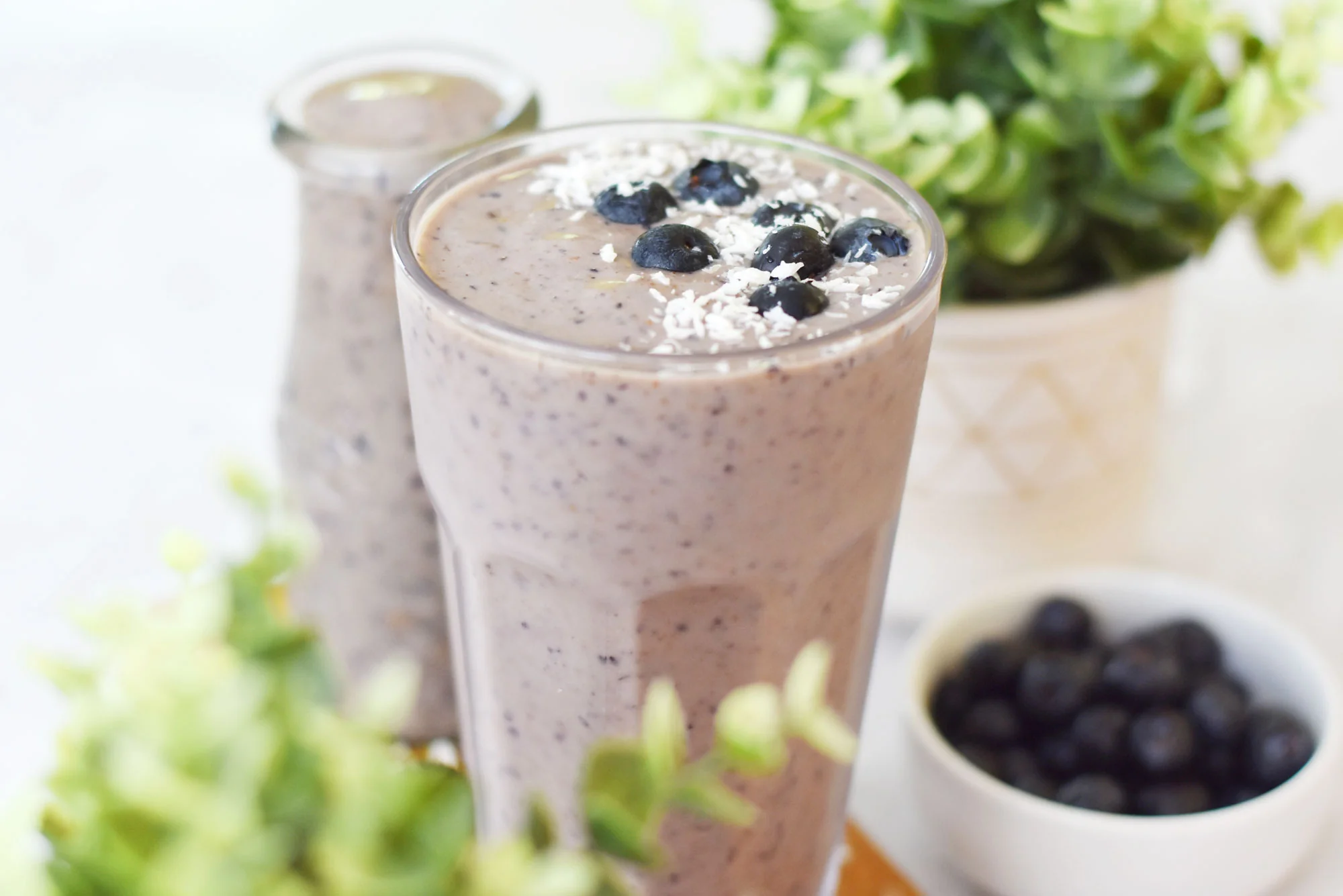
Ingredients
Instructions
- Add almond milk to the blender first (prevents protein powder from sticking).
- Add protein powder, berries, spinach, and chia seeds.
- Add ice cubes.
- Blend on high 45–60 seconds until completely smooth.
- Pour into a glass or travel cup and log in Eati.
Calories, Fat, and Protein (Estimated)
Calories: 260 kcal per serving (base recipe) Fat: 4g Protein: 32g Carbs: 18g (6g fiber, 10g natural sugars)
With 1 tbsp peanut butter: 360 cal, 12g fat, 36g protein. With 1/2 banana: 305 cal, 33g protein.
Why This Protein Smoothie Works for Fat Loss
Most store-bought smoothies are sugar bombs disguised as health food — 400–600 calories with 10–15g of protein. This homemade version flips that ratio entirely.
Macro breakdown: • 260 calories • 32g protein (high) • 4g fat • 18g carbs (6g fiber) • ~12g protein per 100 calories
Why each ingredient earns its spot:
Whey isolate (the foundation): • 25–27g protein per scoop. • Digested faster than any other protein (15–30 min). • Ideal post-workout or when you need protein quickly. • Contains all 9 essential amino acids including 3g+ of leucine.
Unsweetened almond milk (the base): • Only 30–40 calories per cup vs 150 for whole milk. • Neutral flavor that doesn't fight the berries. • Still provides calcium (fortified versions).
Frozen berries (flavor + fiber): • ~40 calories per 1/2 cup. • Low glycemic — no blood sugar spike. • Polyphenols reduce exercise-induced inflammation. • Frozen is just as nutritious as fresh and 70% cheaper.
Spinach (stealth nutrition): • 7 calories per cup. • 1g protein, 1g fiber. • Iron, folate, magnesium — all low in typical calorie-deficit diets. • Blends invisibly into the berry flavor.
Comparison to store-bought: • Starbucks Strawberry Smoothie: 430 cal, 16g protein. • Smoothie King 'Gladiator': 540 cal, 45g protein, $8. • This recipe: 260 cal, 32g protein, ~$1.80.
For the full breakfast cluster, see 20 high-protein low-calorie breakfast ideas.
How to Pick the Right Whey Protein Powder
The protein powder aisle is a minefield of marketing claims. Here's a no-nonsense buying guide:
Three main whey types:
- Whey isolate (best choice):
• ~90% protein by weight. • Minimal carbs, fat, and lactose. • 110 cal, 25g protein per scoop. • Best for fat loss and lactose-sensitive people.
- Whey concentrate (budget option):
• 70–80% protein by weight. • More carbs and fat (5–10g). • 120 cal, 24g protein per scoop. • Slightly creamier in smoothies.
- Whey hydrolysate (premium option):
• Partially pre-digested for faster absorption. • 110 cal, 25g protein per scoop. • Usually not worth the premium price for breakfast smoothies.
What to check on labels: • Protein per scoop: should be 22g+ for value. • Added sugars: <3g. Avoid brands with >5g. • Artificial sweeteners: sucralose and stevia are fine for most; avoid if you have sensitivities. • Third-party testing: NSF Certified for Sport, Informed Sport, or ConsumerLab mark means no banned substances.
Best brands (tested and trusted): • Optimum Nutrition Gold Standard 100% Whey: Gold standard, good mixing. • Dymatize ISO100: Purest isolate, no sugar, best for fat loss. • Legion Whey+: Grass-fed, clean label, transparent sourcing. • Muscle Milk Genuine: Budget-friendly, widely available.
Plant-based alternatives: • Vega Sport: Pea + pumpkin + sunflower blend, 30g protein. • Orgain Organic: Pea + rice, 21g protein, gentler on digestion. • KOS Plant Protein: 5 plant proteins, 20g per scoop.
Flavor recommendations for smoothies: • Vanilla: most versatile, pairs with any fruit. • Unflavored: best if you use strong fruits (berries, mango). • Berry/strawberry: doubles down on the smoothie's flavor. • Avoid chocolate with berries (muddy flavor).
10 Smoothie Variations for Every Goal
Mix and match to avoid flavor fatigue. All stay in the 260–450 cal range:
Fat loss / low cal (under 300 cal):
- Classic berry (this recipe, 260 cal, 32g protein):
• Vanilla whey + almond milk + mixed berries + spinach.
- Green detox (245 cal, 30g protein):
• Vanilla whey + unsweetened almond milk + 1 cup spinach + 1/2 cup cucumber + 1/4 avocado + lemon.
- Mocha (270 cal, 32g protein):
• Chocolate whey + almond milk + 1 shot espresso + ice + cinnamon.
Post-workout (300–400 cal):
- PB chocolate banana (410 cal, 36g protein):
• Chocolate whey + almond milk + 1/2 banana + 1 tbsp PB + ice.
- Tropical (340 cal, 31g protein):
• Vanilla whey + unsweetened coconut milk + 1/2 cup mango + 1/4 cup pineapple.
- Strawberry banana (325 cal, 33g protein):
• Vanilla whey + almond milk + 1/2 cup strawberries + 1/2 banana.
- Pumpkin spice (290 cal, 32g protein):
• Vanilla whey + almond milk + 2 tbsp pumpkin puree + pumpkin pie spice + ice.
Dessert-style (300–400 cal):
- Cookies and cream (330 cal, 33g protein):
• Vanilla whey + almond milk + 2 crushed Oreos + ice. Yes, this works.
- Key lime pie (310 cal, 32g protein):
• Vanilla whey + almond milk + 2 tbsp lime juice + 2 graham crackers crumbled + zero-cal sweetener.
- Peanut butter chocolate cheesecake (380 cal, 35g protein):
• Chocolate whey + almond milk + 1 tbsp PB + 2 tbsp cottage cheese + ice.
Boost add-ins (calorie cost): • +50 cal: 1 tbsp chia seeds, 1 tsp nut butter, 1/2 banana. • +100 cal: 1 tbsp nut butter, 1/4 avocado, 1/4 cup oats. • +150 cal: 1/2 cup Greek yogurt, 1 whole banana.
For a warmer option, see protein oatmeal with banana.
Smoothie Technique: Avoid Common Mistakes
Bad smoothies aren't a recipe problem — they're a technique problem. Here's how to fix the 5 most common issues:
Problem 1: Protein powder clumps. • Fix: Add liquid FIRST, then protein powder, then frozen items on top. • Fix 2: Blend low-speed for 10 seconds first to incorporate powder, then high-speed.
Problem 2: Too thick or too thin. • Too thick: Add 1/4 cup more liquid and pulse. • Too thin: Add 3 more ice cubes or 1/4 cup frozen fruit. • Target consistency: thick enough to eat with a spoon if left 5 min.
Problem 3: Flavor falls flat. • Fix: Always add a pinch of salt — brings out fruit flavors. • Fix 2: Add 1/4 tsp vanilla extract or 1 tbsp lemon juice for brightness.
Problem 4: Gritty texture. • Fix: Blend 60 seconds on high. Under-blending leaves protein powder grains. • Fix 2: Older blenders struggle — add liquid first and let powder dissolve for 30 seconds.
Problem 5: Separates after 10 minutes. • Fix: Smoothies are best consumed immediately. • If commuting: shake vigorously before drinking, add 1 tsp chia seeds to thicken and stabilize.
Blender recommendations: • Budget ($30–50): NutriBullet 600W — handles basic smoothies. • Mid-range ($100–200): Ninja Fit or Ninja Professional — powerful enough for frozen fruit. • High-end ($400+): Vitamix 5200 or Blendtec — lifetime investment, silky smooth every time.
Travel smoothie hacks: • Dry prep: Pre-portion powder + chia in a small container. Add liquid + blend at destination. • Frozen packs: Portion berries + spinach into freezer bags. Grab, blend, go. • Insulated cups: Keep smoothies cold for 4+ hours (Yeti, Hydroflask).
Budget breakdown: • 1 scoop whey ($0.80) + almond milk ($0.40) + frozen berries ($0.50) + ice (free) = ~$1.70 per smoothie. Compared to $7+ at Starbucks.
Protein Smoothie with Whey, Almond Milk & Berries (32g Protein) |…
A 90-second, 260-calorie breakfast with 32g of fast-absorbing whey protein. Keep almond milk, whey, and frozen berries stocked and you have the most consistent high-protein breakfast on earth — ready whenever you are.
Protein Smoothie with Whey, Almond Milk & Berries: 32g Protein, 260…
How many calories in a whey protein berry smoothie?
Is a whey protein smoothie good for breakfast?
Yes, especially post-workout or on busy mornings. 32g of fast-absorbing protein kick-starts muscle protein synthesis, and the liquid format is easy to consume when appetite is low. Pair with a boiled egg or handful of nuts if you need longer-lasting satiety.
Can I drink a protein smoothie every morning?
Yes. Daily protein smoothies are safe and convenient for healthy adults. Rotate flavors to avoid boredom, and make sure you're still eating whole-food meals for fiber, micronutrients, and chewing satiety. 1–2 smoothies per day is a common sustainable pattern.
What's the best whey protein for smoothies?
Whey isolate is the cleanest choice — 25g protein per scoop with minimal carbs, fat, and lactose. Top brands include Optimum Nutrition Gold Standard, Dymatize ISO100, and Legion Whey+. Vanilla flavor is the most versatile for berry smoothies.
Can I make a protein smoothie without banana?
Yes — this recipe is banana-free. Use 4–6 ice cubes for thickness and frozen berries for flavor. If you want creaminess without a banana, add 1/4 avocado or 2 tbsp Greek yogurt. This keeps the smoothie lower in sugar and calories.
Free Tools to Reach Your Goals
Use our calorie burn calculator, calorie calculator, TDEE calculator, and macro calculator to set your daily targets. Explore all fitness & weight loss tools.